


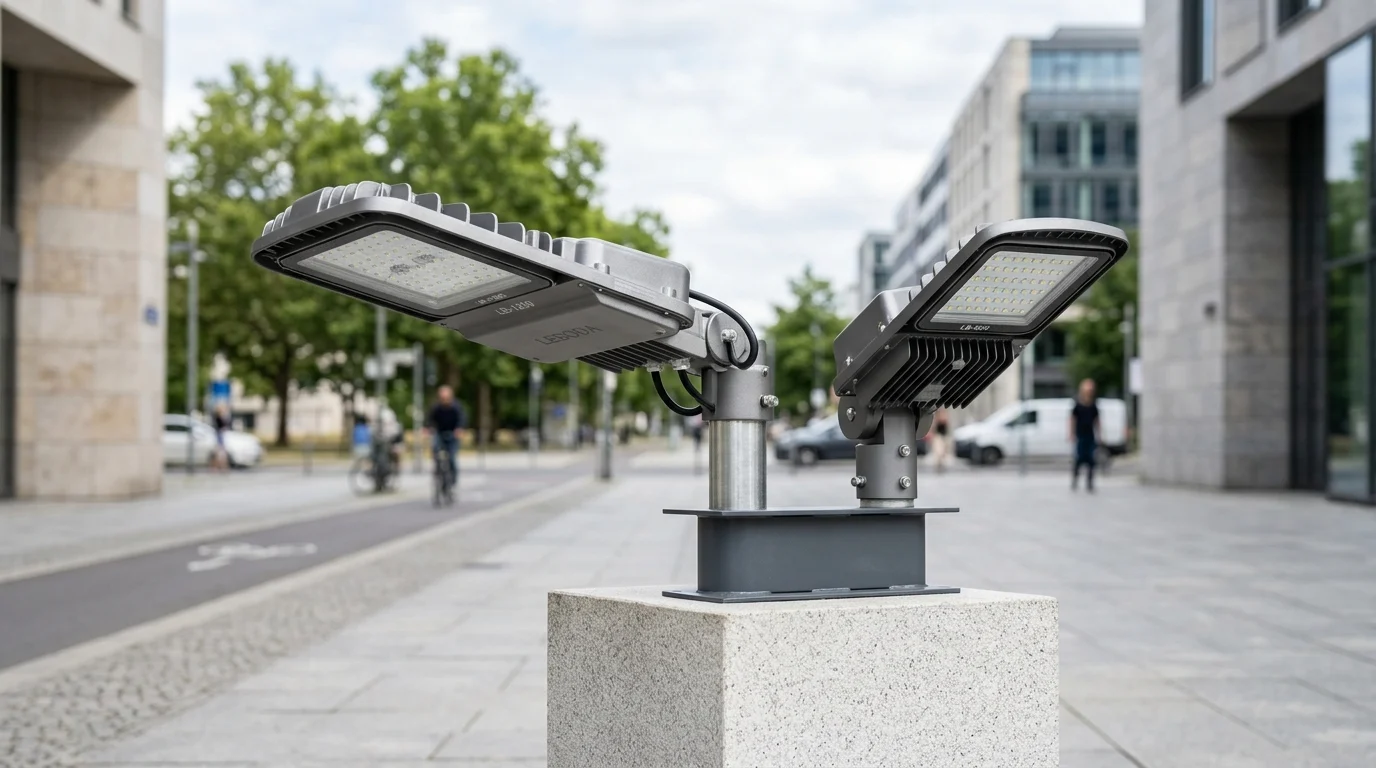
Europe’s street lighting market is moving quickly from basic LED replacement to connected, regulation-ready infrastructure. For municipalities, utilities, and commercial buyers planning 2026 procurement, the winning products are no longer defined only by wattage or price; they are judged by efficiency, modularity, lifecycle cost, smart-control readiness, and compliance with tightening EU sustainability frameworks. As HPS systems continue to be phased out, buyers are targeting major energy reductions while preparing for future requirements around repairability, circularity, and cybersecurity. This guide examines the specifications, demand drivers, and sourcing priorities shaping Europe’s most competitive Led Street Light purchases.
European LED Street Light Market Trends
As municipalities and commercial buyers prepare their lighting procurement strategies for 2026, understanding the trajectory of the European Led Street Light market is critical. The push for carbon neutrality has accelerated the phase-out of legacy High-Pressure Sodium (HPS) systems. Meanwhile, frameworks like the EU Taxonomy and the upcoming Carbon Border Adjustment Mechanism (CBAM) are introducing indirect upstream cost risks for raw materials like aluminum and steel.
When sourcing from established manufacturers—for example, Ningbo Leboda Lighting—buyers must weigh these foundational shifts and regulatory criteria. To make informed purchasing decisions, procurement teams must grasp the total cost of ownership (TCO) pressures and sustainability mandates shaping current market availability.
Key Market Definitions
In the context of the 2026 European market, a standard LED street light is no longer just a diode and a driver in a die-cast housing. Modern definitions increasingly require seamless integration with smart city infrastructure, emphasizing modularity and cybersecurity.
While not universally mandatory, fixtures equipped with Zhaga Book 18 sockets and DALI-2 (Digital Addressable Lighting Interface) drivers are frequently specified as the baseline in modern public tenders. These standardized interfaces ensure that municipalities can upgrade sensor nodes and communication modules without replacing the entire luminaire. This protects the initial capital expenditure while aligning with connected-lighting cybersecurity expectations, such as ETSI EN 303 645 standards and NIS2 relevance for municipal networks.
2026 Demand Drivers
Several distinct drivers are pushing demand toward higher-end, intelligent lighting solutions. The European Union's stringent ErP (Energy-related Products) directive continues to mandate higher baseline efficiency, alongside upcoming Ecodesign/ESPR regulations that will heavily weight tender scoring toward circularity and repairability. Depending on the existing infrastructure, municipalities commonly cite target energy consumption reductions of 60% to 75% when replacing legacy systems.
Furthermore, the integration of IoT (Internet of Things) nodes for adaptive lighting is a primary growth engine. By dimming lights during off-peak hours based on real-time traffic data, projects can target an additional 15% to 20% in energy savings. This combination of regulatory pressure, tender scoring criteria focused on sustainability, and operational cost-saving potential is driving bulk replacements across Europe.
Top Specifications Buyers Compare
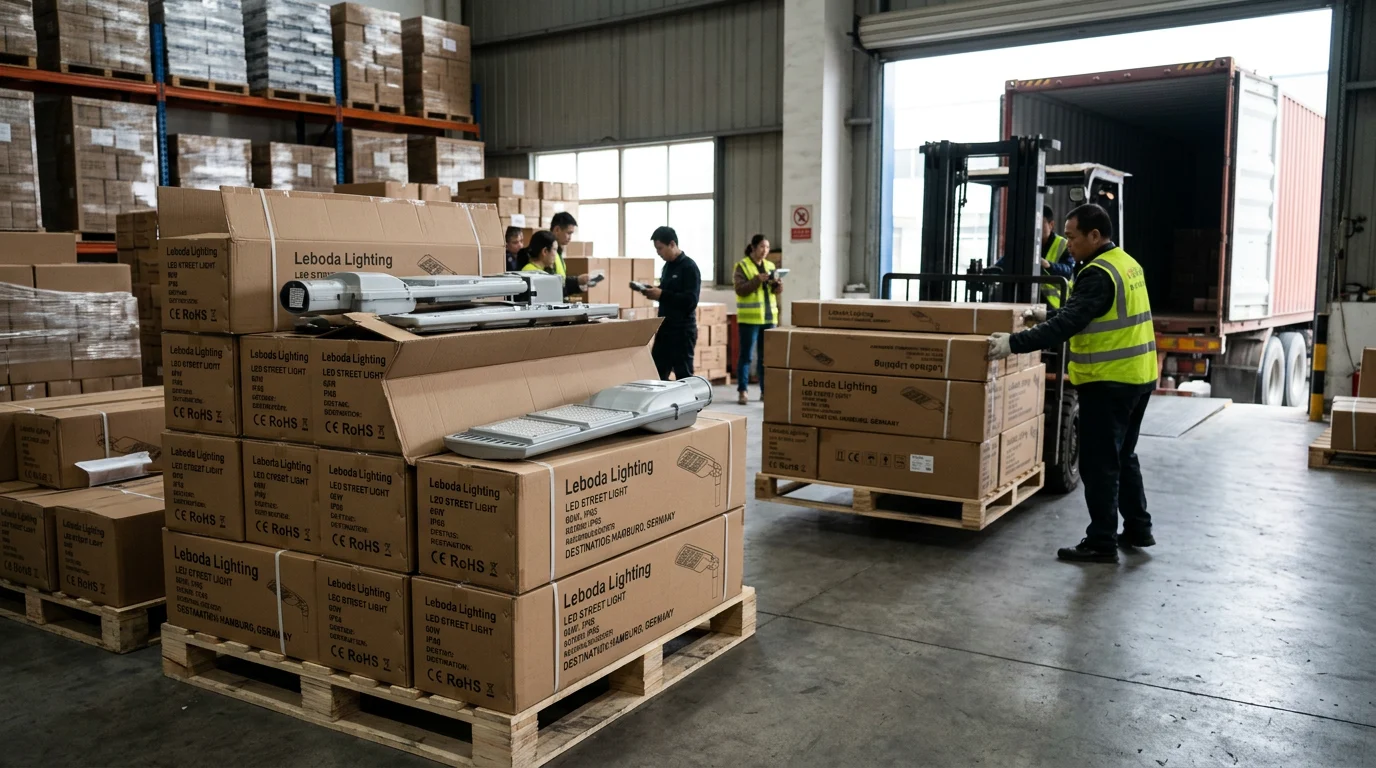
When evaluating the best-selling street light categories for European applications, comparing technical specifications is where buyers separate premium investments from costly liabilities. Procurement teams must look beyond basic wattage and focus on maintenance requirements, visual comfort, and ecological compliance.
Optical Performance and Efficacy
Optical performance is no longer just about raw brightness; it is about precision and efficacy. Depending on the driver and thermal design, 2026 deployments often target system efficacies between 150 and 170 lumens per watt (lm/W) as a competitive baseline, a significant jump from the 120 lm/W average commonly cited just a few years ago.
Equally important is the control of light pollution. While Dark Sky compliance is a patchwork of national and regional ordinances (such as France's outdoor lighting limits or Italy's regional laws), buyers frequently specify fixtures with an Upward Light Output Ratio (ULOR) of less than 1%, and ideally 0%. Additionally, a Color Rendering Index (CRI) of >70 with a warm color temperature (2700K to 3000K) is increasingly preferred to minimize blue light disruption to local wildlife and residents.
Power Ranges and Use Cases
Selecting the correct power range ensures spaces are not over-illuminated, which wastes energy and fails to align with European lighting standards. It is important to note that EN 13201 specifies distinct lighting classes based on road types and traffic, rather than a single compliance threshold. Manufacturers typically segment their best-selling series into distinct power tiers optimized for specific mounting heights and these varied road classifications.
Below is a comparative breakdown of typical power ranges, their corresponding outputs, and ideal use cases to guide the specification process. (Note: Actual luminous flux varies based on specific luminaire efficacy and chosen optics, and many of these tiers now include smart/pole-ready variants as standard.)
| Power Range (W) | Luminous Flux (lm) | Mounting Height (m) | Typical European Application |
|---|---|---|---|
| 20W – 40W | 3,000 – 6,500 | 4 – 6 | Residential streets, parks, bicycle pathways |
| 50W – 80W | 7,500 – 13,000 | 6 – 8 | Urban branch roads, commercial district streets |
| 100W – 150W | 15,000 – 25,000 | 8 – 12 | Main arterial roads, highways, industrial zones |
| 200W+ | 30,000+ | 12+ | Toll plazas, major highway interchanges, high-mast areas |
How to Source LED Street Lights in Europe
Sourcing high-quality Led Street Lights for the European market requires a rigorous vetting process. Whether importing directly or working through regional distributors, buyers must ensure that their chosen supplier can meet strict regulatory frameworks, minimize driver failure rates, and deliver reliable logistical support to ensure a favorable payback period.
Compliance and Quality Checks
The first step in sourcing is verifying mandatory certifications. Products must carry the CE mark and comply with RoHS directives. However, for public tenders, buyers will often request ENEC (European Norms Electrical Certification). While not a legal mandate, ENEC serves as a voluntary, higher-tier independent verification of safety and performance that is frequently required in procurement scoring.
Physical durability is non-negotiable. Ensure the housing offers an ingress protection rating of at least IP66 to withstand heavy rain and dust, alongside an impact protection rating of IK08 or IK09 to resist vandalism and debris. For longevity, scrutinize the lumen maintenance data. High-quality fixtures typically offer an L90 rating of greater than 100,000 hours. Rather than a measured lifespan, this is typically a TM-21 extrapolation from LM-80 data, representing roughly 20 to 25 years of nightly operation (at ~4,000 hours per year) before the light drops below 90% of its initial output.
Practical Supplier Selection Steps
When evaluating established manufacturers such as Ningbo Leboda Lighting, look closely at their operational flexibility, quality control infrastructure, and verifiable reference projects.
Key Takeaways
- Specify Led Street Lights with 150-170 lm/W system efficacy to stay competitive in 2026 European tenders.
- Choose Zhaga Book 18 sockets and DALI-2 drivers to protect capital investment and enable future smart city upgrades.
- Plan LED replacement projects around 60% to 75% energy savings when converting from legacy HPS systems.
- Use adaptive lighting controls to target an extra 15% to 20% energy reduction during off-peak operating hours.
- Evaluate total cost of ownership, repairability, and regulatory compliance rather than comparing fixtures by wattage alone.
Frequently Asked Questions
What LED street light specifications matter most for European buyers in 2026?
Buyers should prioritize 150-170 lm/W system efficacy, Zhaga Book 18 sockets, DALI-2 drivers, strong thermal design, glare control, and repairable modular construction to meet tender, efficiency, and lifecycle requirements.
Why are European municipalities replacing HPS street lights with LEDs?
LED upgrades commonly target 60% to 75% lower energy consumption versus legacy HPS systems, helping municipalities reduce operating costs, carbon emissions, and maintenance frequency.
How do smart street lights reduce energy use?
Smart street lights use IoT nodes, sensors, and dimming controls to adjust output based on traffic or time of night, often targeting an additional 15% to 20% energy savings.
Are Zhaga Book 18 and DALI-2 mandatory in Europe?
They are not universally mandatory, but they are increasingly specified in public tenders because they support future upgrades, interoperable controls, and lower long-term replacement risk.
How do EU regulations affect street light procurement?
ErP, Ecodesign, ESPR, EU Taxonomy, and CBAM-related cost pressures are pushing buyers toward efficient, repairable, lower-carbon luminaires with stronger documentation and lifecycle value.
